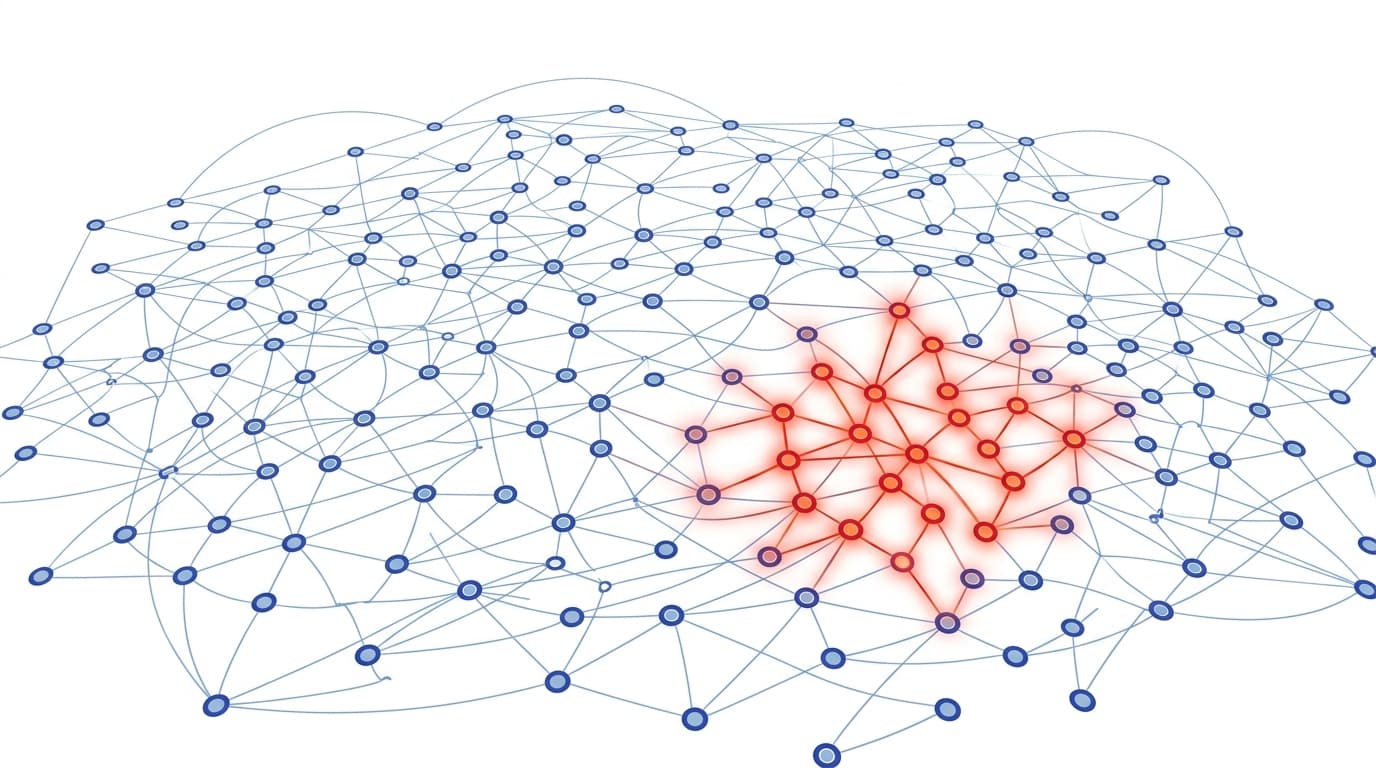
When conducting industrial cybersecurity assessments, one of the most common—and dangerous—architectural flaws we encounter is the "flat" OT network. While flat networks were historically adopted for convenience and ease of maintenance, they have become the Achilles' heel of modern manufacturing and industrial control systems (ICS).
What is a Flat OT Network?
A flat network is an architecture where all devices—Programmable Logic Controllers (PLCs), Human-Machine Interfaces (HMIs), engineering workstations, historians, and sometimes even IT assets like printers and corporate laptops—reside on the same large broadcast domain or subnet. There are no internal firewalls, no routing restrictions, and no logical boundaries separating different functional areas or production lines.
In a flat network, Device A can communicate directly with Device Z, without any security inspection or access control in between.
Why Are They So Common?
Flat networks are prevalent in OT environments for several reasons:
- Legacy Design: Twenty years ago, industrial networks were often entirely physically isolated ("air-gapped"). Because there was no perceived external threat, internal segmentation was deemed unnecessary.
- Ease of Use: If every device is on the same subnet, an engineer can plug a laptop into any switch port in the plant and instantly connect to any PLC or HMI. It simplifies troubleshooting and maintenance.
- Organic Growth: As plants expanded, new production lines and machines were simply plugged into the existing network infrastructure without re-architecting the subnet design.
- Fear of Disruption: Implementing segmentation requires changing IP addresses, reconfiguring controllers, and deploying firewalls—all of which carry a perceived risk of causing downtime in a 24/7 continuous operation.
The Hidden Risk: Unrestricted Lateral Movement
The primary danger of a flat network is that it removes all internal friction for an attacker. In cybersecurity, this is known as enabling lateral movement.
If a threat actor (or a piece of self-propagating malware like a worm or ransomware) breaches the perimeter—perhaps through a compromised vendor VPN, a malicious USB drive plugged into an engineering workstation, or a phishing email that crossed an unsecured IT/OT boundary—they have unrestricted access to everything.
The "Single Point of Compromise" Scenario
Imagine a manufacturing facility with three distinct production lines. In a flat network, these lines are not isolated.
An operator on Line 1 accidentally downloads a ransomware payload via an unmonitored internet connection on an HMI. Because the network is flat, the ransomware easily scans the local subnet and propagates to the HMIs and Windows-based supervisory systems on Line 2 and Line 3 within minutes.
A localized incident that should have only affected one part of the plant has suddenly taken down the entire manufacturing facility, resulting in a total production halt and massive financial losses.
Furthermore, attackers can freely use protocols like ARP spoofing or broadcast traffic manipulation to perform man-in-the-middle attacks or discover sensitive assets without alerting any perimeter defenses.
Beyond Security: Operational Risks
Flat networks don't just pose security risks; they also create operational instability.
Industrial control systems rely on deterministic, real-time communication. Flat networks are susceptible to broadcast storms—where a malfunctioning device or a network loop floods the network with broadcast packets. Because there are no routers to stop the broadcasts, the storm can overwhelm the limited processing power of legacy PLCs, causing them to drop critical control packets, desynchronize, or fault entirely, leading to unplanned downtime.
How Segmentation Addresses the Threat
Network segmentation, guided by standards like IEC 62443 (Zones and Conduits) and the Purdue Model, is the antidote to the flat network. By breaking the large network into smaller, logically isolated segments, you limit the blast radius of any potential compromise.
- Micro-segmentation: Grouping specific production cells or critical assets behind an industrial firewall.
- Access Control Lists (ACLs): Restricting communication so an HMI can only talk to its designated PLC on a specific port (e.g., TCP 502 for Modbus), and blocking all other traffic.
- Deep Packet Inspection (DPI): Ensuring that even allowed protocols are only sending legitimate commands (e.g., allowing "read" commands but blocking "write" commands from unauthorized workstations).
Practical Steps to Move Away from a Flat Network
You cannot fix a flat network overnight. It requires a phased, careful approach to avoid disrupting production.
- Gain Total Visibility: Deploy passive industrial network monitoring tools. You must understand exactly what assets exist and baseline all normal communication patterns before you can build rules to segment them.
- Start at the Perimeter (The iDMZ): Ensure there is a robust Industrial Demilitarized Zone (iDMZ) cleanly separating the IT network from the OT network. This is the most critical first step.
- Identify Critical Enclaves: Identify the most critical physical processes or safety systems (Safety Instrumented Systems - SIS) and prioritize isolating them into dedicated zones.
- Deploy Firewalls in Transparent/Monitor Mode: Install industrial firewalls between planned zones, but leave them in a passive "monitor only" mode. Observe the traffic logs to verify that legitimate process communication will not be blocked when rules are enforced.
- Gradual Enforcement: Carefully transition firewall rules from "allow all/log" to "deny by default," strictly permitting only the necessary, verified traffic between zones during scheduled maintenance windows.
Key Takeaways
A flat OT network is a massive, unmanaged risk that allows a minor, localized compromise to escalate into a catastrophic plant-wide outage. While redesigning an industrial network is challenging, a methodical, phased approach to segmentation is essential for building a resilient, defensible OT environment.